
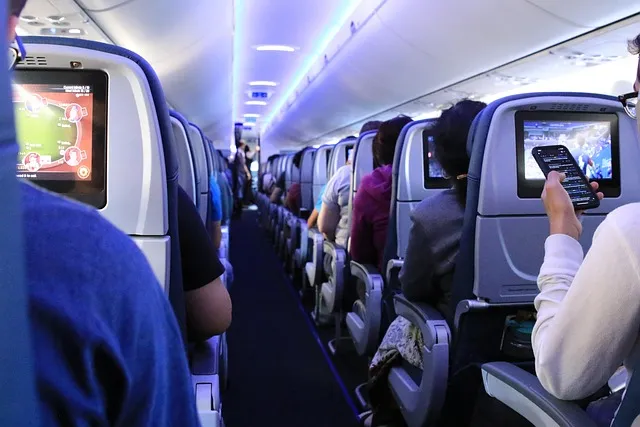
For millions of Indians travelling abroad each year, one of the first challenges after landing has nothing to do with immigration queues or luggage belts. It is the scramble for mobile connectivity — navigating unfamiliar telecom stores, paying steep roaming charges, or going without data until hotel Wi-Fi becomes available. A rapidly maturing technology is now poised to make that experience obsolete.
The travel eSIM — a digital SIM embedded directly in modern smartphones — is transforming how international travellers stay connected. And with India’s outbound travel market growing at a record pace, Indian travellers stand to be among the biggest beneficiaries of this shift.
What Is an eSIM?
An eSIM, or embedded SIM, is a programmable chip built into a smartphone that eliminates the need for a physical nano-SIM card. Instead of swapping cards at a foreign airport, travellers can purchase and activate a data plan remotely — often in under two minutes — and land at their destination with mobile data already active.
While the technology has existed since 2016, mass adoption has accelerated significantly. Apple removed the physical SIM tray entirely from the iPhone 14 series in the US market, and flagship Android devices from Samsung, Google, OnePlus, and Xiaomi now widely support eSIM. In India, where smartphone penetration continues to climb and the iPhone user base is expanding rapidly, eSIM-compatible devices are increasingly commonplace.
The Roaming Problem for Indian Travellers
India’s outbound travel market has seen sustained growth, with an estimated 28–30 million Indians travelling internationally in recent years. Popular corridors include Dubai and the Gulf states, Singapore and Southeast Asia, Europe (particularly the UK, France, and Switzerland), the United States, Canada, Australia, and Japan. Business travel, family visits, leisure holidays, and the growing trend of destination weddings all contribute to rising numbers.
Yet international roaming remains a significant expense. Major Indian telecom operators offer international roaming packs, but daily charges of ₹500–1,500 are common for even modest data usage. Over a week-long trip to Europe or ten days in the United States, roaming costs alone can add ₹5,000–15,000 to the travel budget — a meaningful sum, particularly for families and young professionals travelling on tighter budgets.
Purchasing a local SIM card abroad brings its own difficulties. In countries like Japan, South Korea, and across Europe, the process often involves ID verification, language barriers, and time lost in queues. For many Indian travellers, the result is a frustrating first few hours in a new country spent sorting out connectivity instead of exploring.
Travel eSIMs address this directly. An Indian traveller departing from Delhi, Mumbai, or Bengaluru can purchase and activate an international data plan before leaving home — on a familiar device, in a matter of minutes — and arrive abroad fully connected.
BazTel: Low Cost, Zero Complexity
Among the growing number of travel eSIM providers targeting the global market, BazTel has drawn attention for its combination of aggressive pricing and a remarkably simple activation process. The Australian-founded company offers data plans across more than 160 countries, with prices starting from approximately ₹85 (US$1) — positioning it as one of the most affordable options available to Indian travellers.
What distinguishes BazTel from competitors such as Airalo, Holafly, and Saily is the ease of its setup. Most eSIM providers require users to scan a QR code, download a companion app, or manually navigate device settings — steps that can be confusing, particularly for first-time international travellers or older family members. BazTel has simplified this through its one-click dashboard installation: users purchase a plan on the website, press a single button, and the eSIM installs directly on the device. No QR code is needed. No app download is required. No technical expertise is necessary.
For an Indian family preparing for a holiday in Dubai, a young IT professional heading to the US on a project assignment, or a group of friends planning a trip to Thailand or Bali, that simplicity translates into one less thing to worry about during pre-departure preparations. The process takes under two minutes and is compatible with iPhones, Samsung Galaxy devices, OnePlus handsets, and most other eSIM-enabled smartphones.
Coverage Aligned with Indian Travel Patterns
BazTel’s coverage spans the destinations most frequented by Indian travellers. The UAE — Dubai and Abu Dhabi remain the single most popular international destinations for Indians — is fully covered with affordable plans. Singapore, Malaysia, and Thailand are included for the large Southeast Asian travel corridor. The United Kingdom, France, Switzerland, and the broader Schengen zone are available for European trips. The United States, Canada, and Australia — key destinations for business, education, and family visits — are also covered, along with Japan, South Korea, and the Maldives.
Multi-country regional plans are particularly relevant for Indian travellers on extended itineraries. A couple touring Europe across multiple countries, a backpacker exploring Southeast Asia, or a business traveller visiting clients in several Gulf states can remain connected on a single eSIM without purchasing separate plans at each stop.
The Market Outlook
The global travel eSIM market is expanding rapidly, driven by wider device compatibility, falling data costs, and growing consumer awareness. Airlines, online travel agencies, and hotel booking platforms are increasingly integrating eSIM purchases into their checkout flows, making connectivity a standard component of trip planning.
For Indian travellers, the timing is particularly relevant. The rupee’s value against the dollar, euro, and dirham means every expense abroad is closely watched. Replacing daily roaming charges of ₹500–1,500 with a pre-paid eSIM that costs a fraction of that amount is one of the simplest ways to control costs without sacrificing connectivity. As India’s middle class continues to expand and international travel becomes more accessible, demand for affordable, hassle-free connectivity solutions is expected to grow substantially.
The Bottom Line
The era of landing abroad and scrambling for mobile connectivity is drawing to a close. Travel eSIMs offer a faster, cheaper, and significantly simpler alternative to traditional roaming and foreign SIM cards.
For the tens of millions of Indians heading overseas each year — whether for business, family, education, or leisure — providers like BazTel (baztel.co) present an accessible entry point: plans from approximately ₹85 across 160+ countries, setup in under two minutes, and the assurance of landing connected. In an age where a working smartphone is as essential to international travel as a valid passport, that convenience carries real value.
Company Details
Company Name: BazTel Pty Ltd
Contact Person: Peter Basil
Email: marketing@baztel.co
Phone: +61 452 484 270
Address: Sydney, Australia
Website: https://baztel.co
